How is DTI Debt-to-Income Calculated on a Mortgage?

Debt to Income (DTI) is a measure of income and ratio that tells lenders how and what loan product you qualify for. Both FHA and Conventional mortgages have their own DTI requirements; and both use a front-end and back-end calculator for loans.

The front end ratio is your projected mortgage payment to your gross monthly income (GMI). For example:

If you’re pre-approved for a mortgage payment of $3500, that number is divided by your GMI. If you make a gross of $9000, 3500/9000 is your calculation. In this case, it’s 0.38888888 which estimates to 39% (multiply the decimal number by 100 if you don’t know how to calculate percentages) rounded up. This is your front end DTI calculation, here as 39%. This is too high for both loan types. Your income and payments ratio cannot exceed 28% for conventional and 36% for FHA.

To pass this ratio hurdle, you need to lower your mortgage payment: more down, improved credit, finding a higher income co-signer, a cheaper home, lower tax area, no HOA, etc.

Once you pass the front end DTI requirements, the back end then incorporates all of your current and recurring payments including: student loans, car payments, credit cards, payment plans, alimony, additional payments. All of those are added together with the payment you are approved for. That new number is then divided by your monthly income. That number cannot exceed 43% and 38% for conventional loans.

How to do this on your own before applying:

Take your monthly income and multiply it by .31 for FHA and .28 for conventional. That’s your approximate front end DTI. For your back end, multiply by .43 for FHA and .36 for conventional.

Now, add up all of your substantive expenses, as mentioned above, and subtract them from the calculation you get after multiplying. That’s your back end DTI and essentially your monthly payments you might be paying.

For example:

Take the GMI (we will use $9k as the combined GMI for this sample) 9000 times .43 = $3870. Now subtract your bills. For this sample, we’ll use the scenario below:

You have credit cards totaling about $500 a month in payments, student loans of $600, and two car payments totaling $1,000. Those are expenses of $2,100. Take away from the $3870. You are left with $1770 for a monthly payment. With today’s rates, you’d need a substantial down payment and affordable home price to achieve this. This is for FHA. For conventional, you would be approved for even less. This is why car payments and credit cards are so horrendously damaging to your home buying chances; and this is with excellent credit.

If you don’t have student loans and two car payments, you’re doing great! If you also paid down credit cards (never cancel them!), you’re doing even better. Keep in mind, we do NOT incorporate payments like child care, cellphones, subscriptions, and of course utilities and food. So you have a lot of monthly expenses you need to take into account on your own. Knowing your finances is the most crucial part of applying for a loan and determining what you can afford. Remember too, payments often go up after the first year when insurance and taxes often reassess. This can increase a few hundred dollars in some areas so have wiggle room, always. Don’t buy what will push your wallet.

There are a lot of mortgage calculator websites online and you can Google one as well. They’re all a bit different but will give you a ballpark range of what you might expect to pay. If those numbers aren’t affordable to you, that’s probably accurate enough but check with a lender to be sure. You need to know all of your bills, not just what lenders look at, but EVERYTHING, and think about other lifestyle factors and having money to live life too. What you can afford and what the ratios say will determine your approval amount. Knowing how ratios work though, will help you work through your finances and help you on your path to buying.

If you need more help calculating your income and payments, email agentofparadise@gmail.com and we can review your options together.

Understanding Your Loan Application

What is the URLA? The Uniform Residential Loan Application is the loan application you will fill out when applying for any type of mortgage. It is the basic paperwork of personal information needed to process the application, and financial details we need to determine your financial standing and run your credit. We need bank accounts, statements, employment documents, pay stubs, recurring bills, etc. If you have financial records for assets, additional properties like rentals are needed to determine eligibility and total gross income for all applicants on the loan. Different loans have different rules, and some loan programs are geared towards specific buyers, so the 1003 form will ask all these questions to help us find you the best loan product.

Screenshot of a page from the URLA

As you can see above, credit usage is part of the application and this will be critical in your approval. We will use this application as part of your pre-approval as well so you can put in offers for whatever house you are hoping to buy. During the approval process and underwriting, we will run your credit reports of course and continue to monitor your account balances and such; but we need to know for preapproval and get an initial idea of how we can process an application, and determine if you should right now.

Not only is it federal law to be accurate and truthful about your financial information, not disclosing all your balances and accounts will only harm you after your offer is accepted because when we begin digging into your bank accounts and check your credit history, this will become a major problem right away and you won’t get far into underwriting. You might get lucky and be able to pivot to another type of lending program but it can cause you to fall out of escrow and lose the house and a lot of money. Don’t hurt yourself and others by hiding what we are obligated and paid to find! It makes no sense but people do try it. Just be honest or wait to apply until you’re ready and comfortable with your money situation.

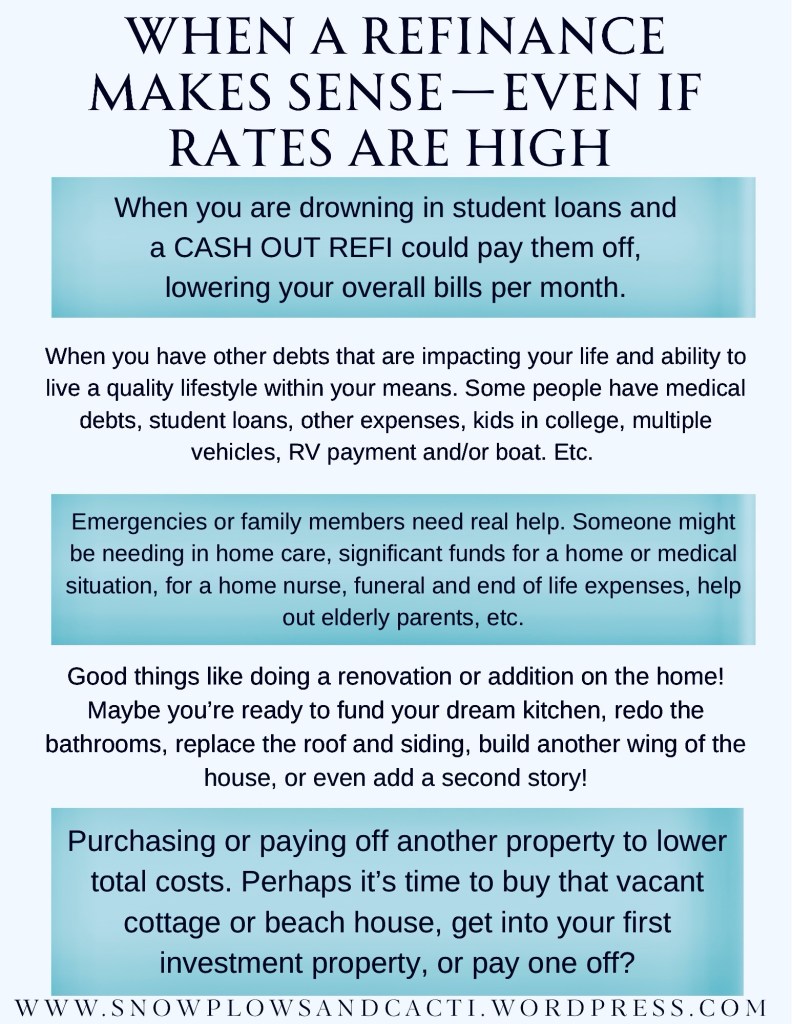
When it Makes Sense to Refinance with Higher Rates

For most, this is pretty self-explanatory from the image, but if you’re not in any of these situations, remember that you can also refinance at any time for a very positive reason. You might prefer to have a second mortgage on your home to fund tuition rather than you or a child paying ridiculous student loans for life. You might be doing well in life and don’t want to move, but also would like a new boat in the driveway, or to travel abroad for a year or two. Equity can be your own personal bank that you use and repay when needed. Once you pay it off, it’s there again and usually higher than before because most of the time, equity increases through the years. That’s why so many people use their home equity to purchase a rental property all cash and pay the cash out refinance so they can win better deals and beat other offers that require a financing contingency at contract. Others use a HELOC to buy what they need and keep paying it every month until it closes or they purchase what they pulled out money for.

REMEMBER: You don’t need to be in financial distress to enjoy the gift of equity.

If you need financing anywhere in California, please reach out to me directly, and we’ll get you where you want to be.

Agentofparadise@gmail.com || (760) 625-6836

When, and When Not, to Buy a House

This might seem obvious, but it isn’t actually. How many people do you know who rushed into buying a home in 2020 or 2021 because the rates were so low and now they’re wishing they had a different home, but they “can’t” move because they are not about to let go of their 2-3% interest rate? You might know a few. Most people know at least one. Why is that? Millions of Americans bought when the rates were low, but the house wasn’t right. Many people saw cheap rates and took a leap into whatever house they could win in an insane bidding war, only to find themselves stuck in that house because they’re too afraid to pay 6-7% on a home that makes far greater financial sense to them. They might have even overpaid for that house (overbid so much just to win over the other offers), and now they have no equity because prices are going down. If they sold now, they’d take a potential loss, or a big financial hit. This is when you should NOT buy a house.

I purchased in 2023 at a rate of 7%. I paid a little bit lower price, and the house is absolutely right for my family for the long haul. I knew I could afford the mortgage with that rate, and it was also a lower monthly payment than most local rents for a home or apartment that had half the bedrooms and size, with no yard or parking. This is a great example of when TO buy. I buy when the timing and house was right, not the rate. A year prior, we looked into buying and the prices were still insane, as were the bidding wars. We were constantly looking to see houses going so fast with dozens of offers over ask. We would have no equity for a decade, and if we needed to sell, it would hurt our family and our future. If we rushed into the decision, even if we didn’t need to move, we’d be stuck in a home that didn’t work for us but we couldn’t sell because prices are now down and we would owe more than it’s worth or have no more equity, aka down payment, for the next house. Buying just because, can cause significant financial ruin and take away from your quality of life just being in a home for many years that doesn’t work, simply because you were in such a rush to “win” and not think it all through. Don’t buy a house like this!

Regardless of the current interest rates, if the decision to purchase a home is made in haste and a “close enough” approach, you are probably going to regret that purchase in the near future; and not be able to correct your costly mistake. However, if the rates are higher but prices continue to drop, you have lots of time to really decide on that home, do your diligence before your offer is placed or accepted. You have more time to negotiate terms and price, to be very sure you’re making the best choice for your household. This is the “marry the house, date the rate” strategy. You don’t have to make a quick decision, filled with second-guessing and loss of sleep with a high price tag, and you have more than enough leeway to gain some equity in five years to make changes should your circumstances change again soon. If the home you have been eyeing for a long time, comes to market with lower rates, then of course, that also makes sense. The point is, NEVER make a huge and expensive decision based on an APR when your whole life also revolves around that decision. You pay the rate but living with the house, can feel more taxing and a burden if it’s not the right one. Make smart money decisions that you took your time on and will benefit you for the long run!

This is why I always talk to clients about goal setting and their plans for the next several years. If you need more information and help on this, I have free resources and additional blogs. You can also email me at agentofparadise@gmail.com and we can do some free goal setting and consultations together to see where you’re wanting to go, where you’re at, and getting you from here to there.

How Tip-Based Employees Can Document Income and Save on Taxes Still

Servers, bartenders, etc

Service-based employees are notorious for not fully documenting their income in order to avoid taxes every month and filing year. The problem is, as lenders, we need the documentation from your employer to verify your income with your tax returns and bank statements so everything supports each other and proves your ability to repay—the singular purpose of underwriting. Nowadays, underwriting is very critical of your financial documents and avoiding the possibility of default is the primary goal of the lending banks. Underwriters heavily scrutinize and evaluate all of your money in and out, and they will make sure all of the numbers make sense and prove each other documentation you provide.

Instead of tax evasion, which is what that technically is when you don’t properly report your income, you can avoid taxes through employer 401k and traditional (not Roth) IRA contributions which allow you to deduct $30k combined income from your taxable income AND still show to lenders how much you really make with proof—because we legally need that.

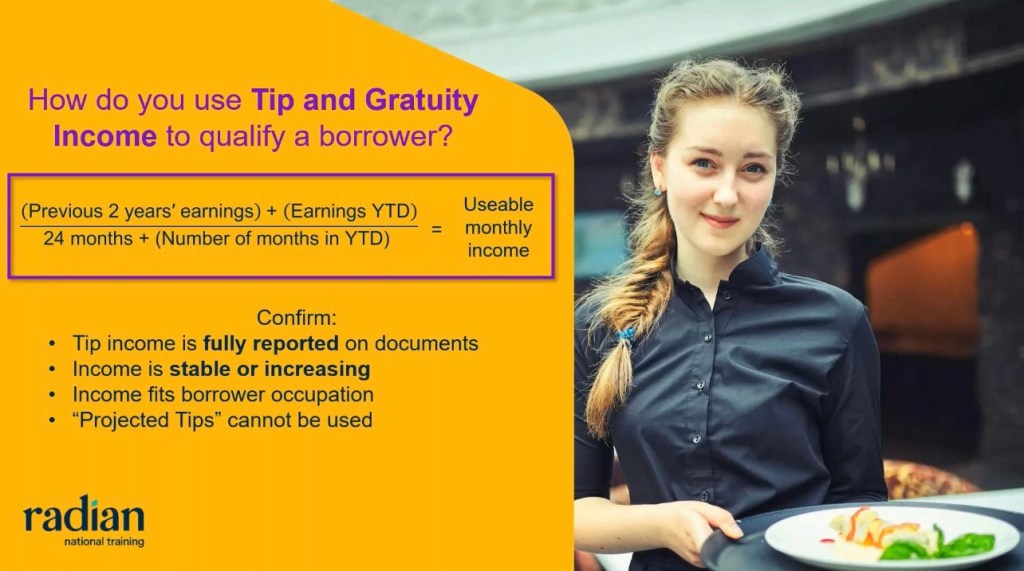
Your income is also a major factor in calculating your DTI Debt to Income Ratio and the requirement for FHA or Conventional Loans are specific and rigorous to fit federal regulations required for QM Qualified Mortgages guidelines. Your income will not pass the Ability to Repay test if you cannot show enough gross income to cover all of your expenses and your pending mortgage payment you’re hoping to be approved for so we need to see substantial income to fulfill those objectives as required for the loan qualifications. Non-documented tips and income will not be able to be used and so it’s very important to have a minimum of two years of stable and consistent income that shows you will continually make this income and be able to have the paperwork to show for it. You can’t just say, “trust me” and hope we will. Unfortunately, there are rules and guidelines we have to follow and underwriting will flag all of the inaccuracies and numbers that aren’t adding up.

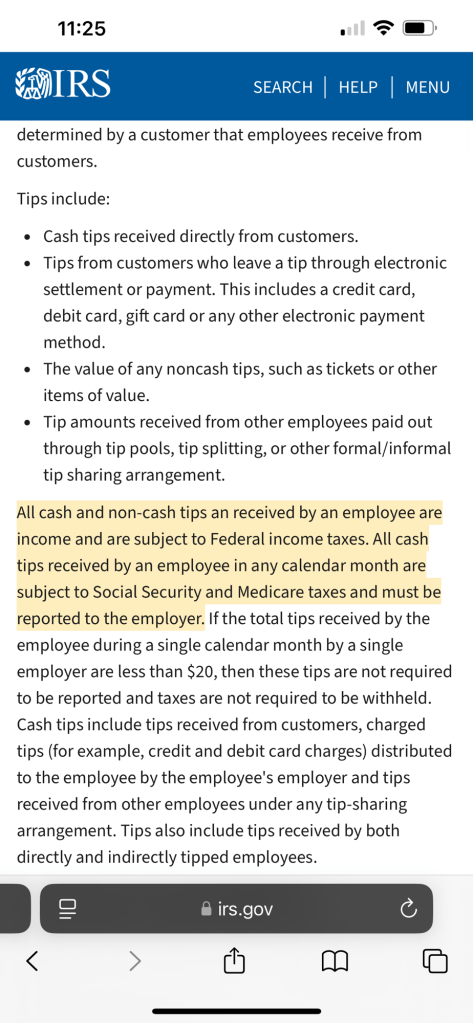
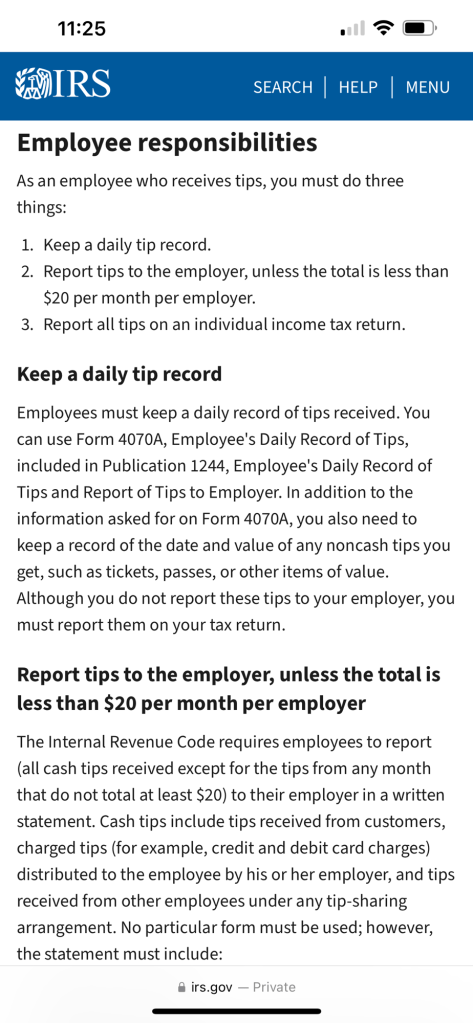
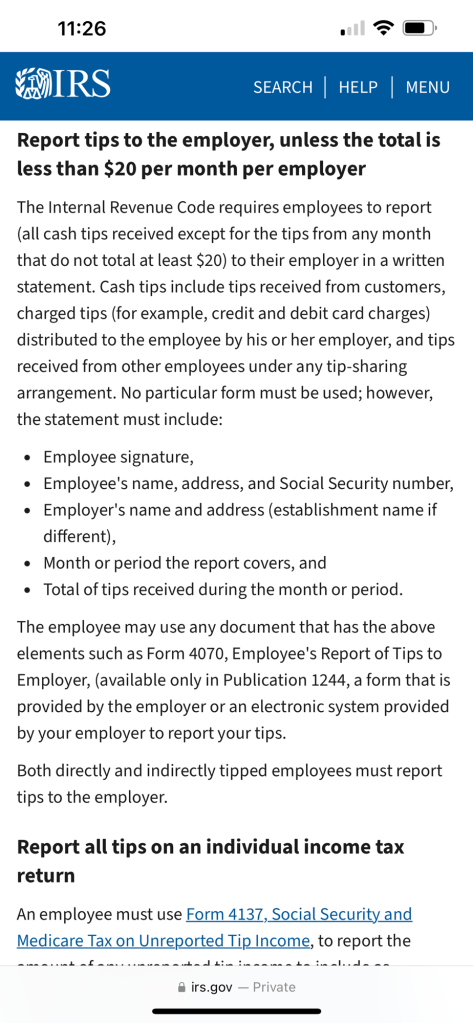
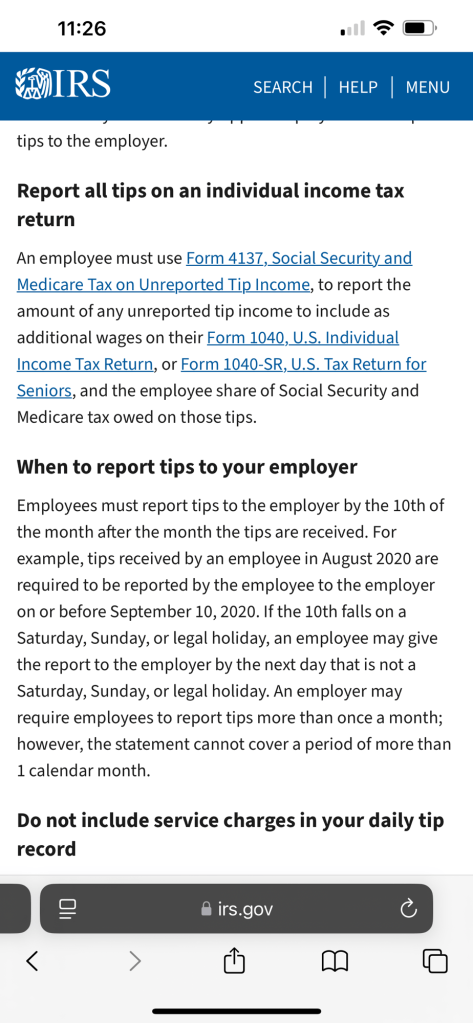
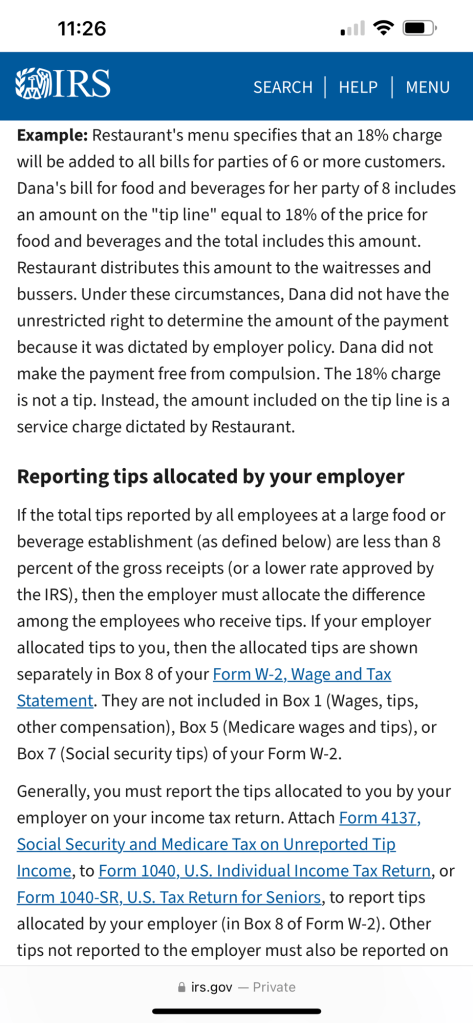
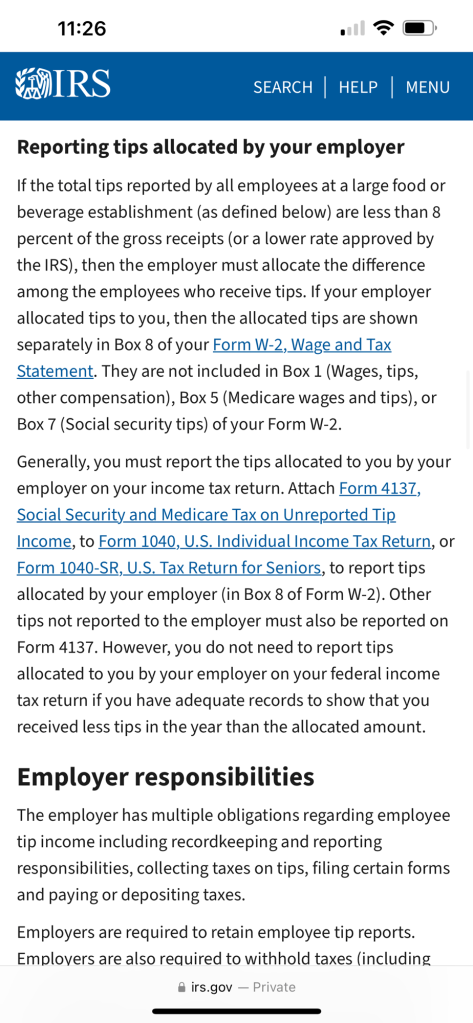
Document your tips through your employer and paycheck so they’re able to be used as gross income. Talk to your CPA and research the IRS laws on tip reporting.

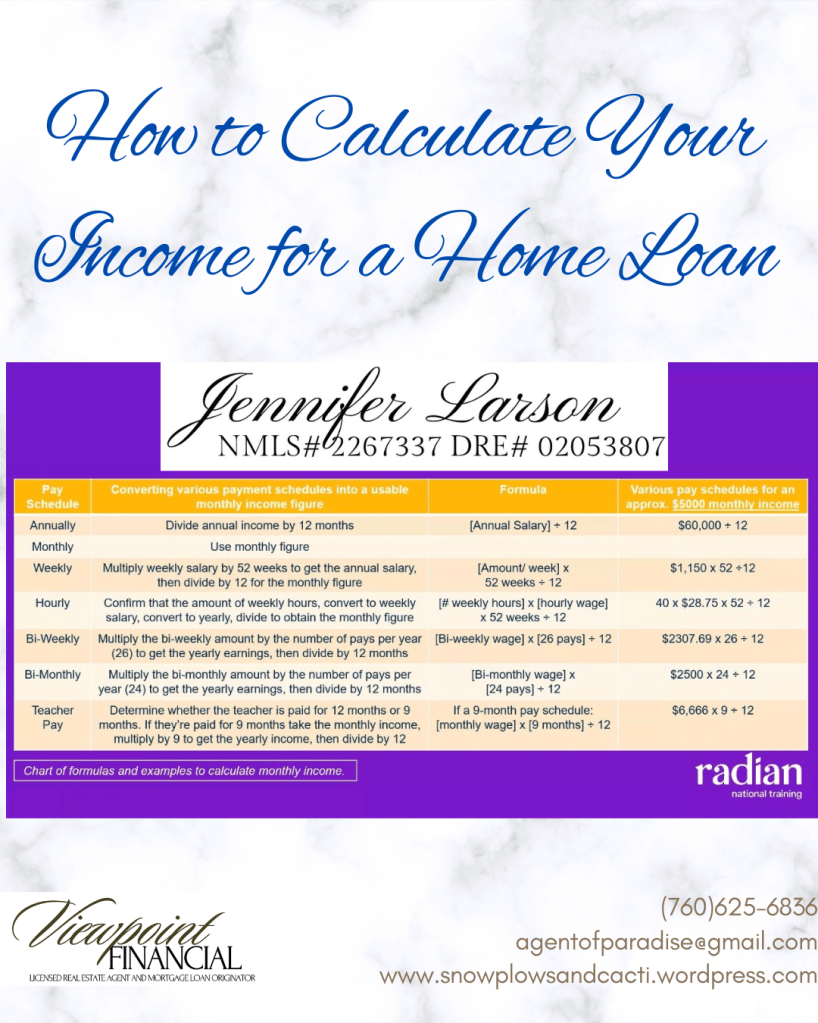
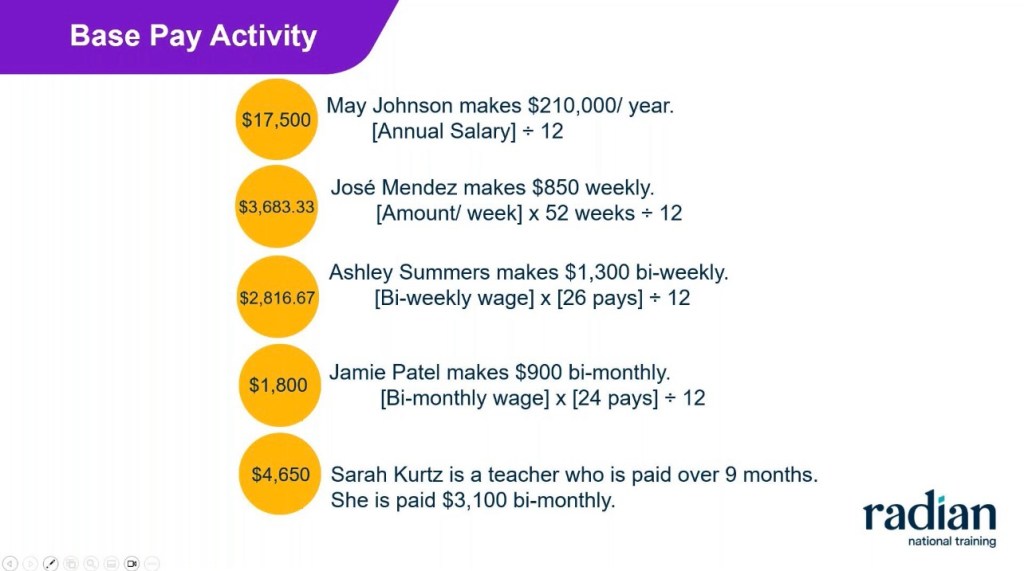
How Varied Income is Calculated for a Home Loan

If you have seasonal income, most of your income comes from tips or commissions, or you have other income sources that might be inconsistent or part time, there are some things to consider when applying for a loan.

There are more posts coming up regarding calculating income and documentation for variable income.
Examples

Some buyers make the majority of their income in tips like waiters, bartenders, other service industry professionals, etc. If most of your income is not in wages and you want to purchase a house with a loan, it is absolutely critical that income is properly documented as legal income. So many people love this method of income because they can make a lot of under the table money and avoid taxes. The problem is, as lenders and banks, we use your on paper income so if your taxes and employer tax forms don’t show how much you’re really making, we can’t use what you haven’t legally claimed as income. FHA and Conventional Loans require two years + of income verification and adequate documentation of tax returns, bank statements, W2s, etc.

Very important paperwork 📋 needed for a loan!
Not all income is used like you think it is

Irregular monies do not help your loan application process in the way that we need regular and consistent money to use as income verification. If you occasionally get a bonus or the amounts are not predictable or consistent enough, then they are not likely to be included in your income; regardless of amount.

This goes for gig jobs like Uber/Lyft, etc.
Commissioned sales go up and down so we need to see a healthy trend of income and success going forward.

The main factors all buyers need to know is we need VERIFIED INCOME and we have a form for this, a VOE, and underwriting will investigate this with your employer and all financial statements to prove all documents are real and coincide with one another. That’s the biggest portion of escrow and why it takes so long these days. If your money isn’t well stated in forms and documents then it can take much longer for underwriting to verify and approve your loan if the transactions and numbers don’t make sense. Remember that the paper trail is what is most important for the banks issuing the funds to back your loan so make sure you are filing taxes honestly, annually, and stating all income. If you’re looking to save on taxes, the next posts will help you do that while still keeping your stated income high to get approved for a loan while paying less in taxes! Be sure to read the articles of March 2025 after this one to get the information or reach out for my Home Buyer Guide book.

I am a licensed real estate agent and lender in California but I can refer you anywhere in the country. Call/text (760)625-6836 agentofparadise@gmail.com for more information.

Saving Money and Making More Series—Part 3

Plan 4 is basing your plan of attack off the likely purchase price and timeframe. Let’s assume you will need to buy in three years and homes in your area for what you want to buy will most likely be about $600,000. You need to reverse engineer this by multiplying the 600k by .035 (3.5% for an FHA loan down payment)to give you $21,000 when then divided by 36 months for three years. This is the down payment needed ($7k monthly) but you also need to cover your cash to close of closing costs and loan fees. On average, your total cash needed to close could be 6% of the total purchase price. In this case, it’d become $36,000. That’s $1,000 per month needed to purchase in three years and have enough to sign and be approved. That is not doable for many families which is why it’s so important to run the numbers and know what you need, how to structure your deposits, and where you can make adjustments in your plan. Maybe you need lifestyle changes, more time, different areas or needs, or you need to try and buy something at a lower price that might be a fixer, three bedrooms instead of four, etc. Plan 4 is more aggressive for some buyers but it’s also specific and strategic more than the other plans on previous posts.

Plan 5 is for buyers who have the means and tenacity to be aggressive in their savings path and have the resources to do so. I have multiple versions of an accelerated savings strategy below for different budgets, starting with the most affordable:

This is obviously more aggressive and difficult for many people but if you can afford it, will fast track your success.

The third accelerator option I suggest is $200 per week. There are 52 weeks in a year so that gives you over $10,000 at the end of each year! If you can afford to do so, then of course this is what I recommend. If you’re using the Roth IRA strategy with your savings, remember that the 2025 limits are $7,000 unless you are at least 50 years old so the rest needs to go into a CD or HYSA.

Obviously these particular plans will not work for everyone if their income can’t support them but if you are lucky enough to do so, this is a great way to boost your income and stop spending money on other things that aren’t essential to help you save for a down payment on a house.

I’m a licensed real estate agent and mortgage loan originator and I can refer you anywhere in the country or help you if buying or selling in CA.

Call 📞, text, or email 📧 (760)625-6836 or agentofparadise@gmail.com

Saving Money Series—Part 2

Every client is different obviously so I am going to share multiple plans and ideas for various timelines and budgets. If you are not sure yet when you will buy a home but you are interested in getting started to plan ahead, choose a savings schedule you feel comfortable with at your own pace, based on your future desires and ability to contribute regularly. For those looking to buy sooner, you likely need a more rigorous plan of attack so it’s more important to choose the right strategy and savings scenario to reach those goals quicker.

For most buyers, the regular contributions should push you to be cognizant of your spending with every dollar coming in and going out; however, it shouldn’t stress you out to save money or prepare to become a homeowner. If the path to savings, even small amounts, is not an easy one to adapt to, send me a message to go over your finances together. We’ll discuss specifics how your goals may be achieved within your unique circumstances.

Plan 1: Biweekly Deposits (every two weeks) I have most clients begin with a $200 biweekly deposit into an HYSA or Roth IRA fund over a 4-5 year period for most buyers to do the average prices in my area which can range up to $650k now for a basic 3-4 bedroom home; but not every buyer needs that many years or that much home to purchase. Currently in the markets I focus on, prices have dipped below the $500k range in my SoCal areas and so 4 years is usually enough to help them get enough for their cash to close and I also help with getting them some seller contributions to make sure they have money to close.

All of my plans are a recommended minimum but I also encourage people to put more in on the weeks they can. If they can’t quite meet these criteria, I work with them to help make it happen and analyze the numbers together. Everyone is in a different situation so we make tweaks and adjustments where needed.

As my clients work through these plans and some are able to work towards more money put away, I help them come with revised plans and calculate their end game goals to meet their ownership aspirations, maybe sooner. Flexibility is key to life!

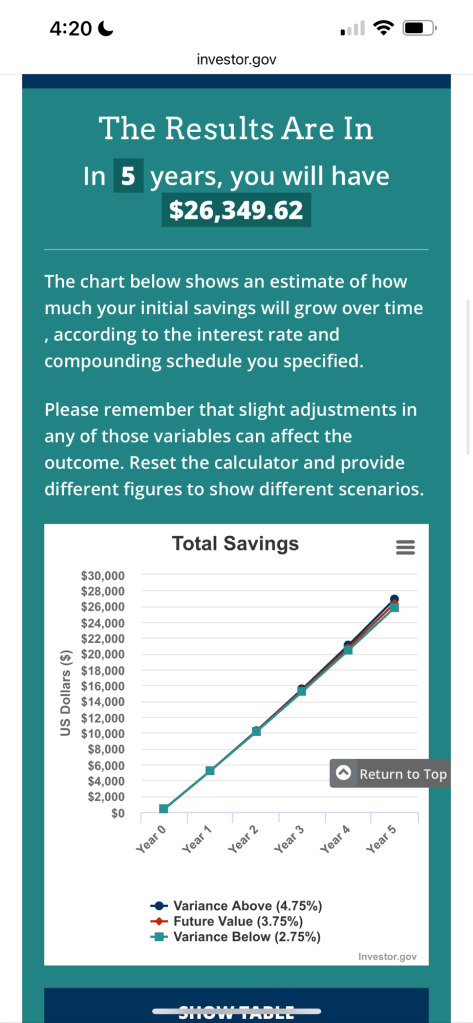
IT’S IMPORTANT TO NOTE: At this rate of plan 1 in a standard bank account such as Bank of America, Chase, or Wells Fargo, this is $400 per month and $4800 per year. Since those accounts barely pay pennies in interest, this would take up to five years to afford a $500,000 home with an FHA or low down payment conventional loan. You’ll have $24,000 in savings. In an HYSA at current rates, you’ll have over $26,000.

That’s an about extra $2350 just for having a better account! A Roth IRA can help you grow this even further.

If you expect to purchase a home under $500,000 in the next five years, then this plan will help you get there. If you’re looking more like 3 years, you need to put in at least $600 month in an HYSA to get there. It’s so important to know how much of a home you expect to purchase and reverse engineer those steps. That means taking the total you need and divide by the number of years or months in which you wish to purchase. Your monthly deposit will need to hit that number at a minimum to keep on track. This is why I also remind to clients to put some of their tax returns into these savings accounts instead of spending it all on nonessential purchases. Most buyers could purchase a home just on three years of returns alone, especially if they have multiple children. An HYSA will tack on interest to those and at a faster rate because of the amounts of those larger deposits.

Plan 2: Basing your savings strategy on NOT knowing the price range you will buy or how long it will take to get you there is another way to plan when you know where you want to go but not when or exactly how yet. Usually, this is for future buyers who can’t afford $400 right now or are not ready to yet. This could be due to the client being unsure if homeownership is their goal in the near future or are on a much lower budget and are more on a plan of just consistently saving without a timeline or known endgame. You can always reevaluate later and see where pre-approval might land you and what you really want to buy down the road—maybe a new build or lot to build, possibly an investment property one day, etc. For buyers in this situation, might recommended deposits vary quite a bit based on circumstances, income, credit, etc but I’d say for many, at least begin with $250 monthly/ $125 biweekly payments to your HYSA/Roth. This can also be for those with decent income but no clear future plans yet and so for those future buyers, I strongly urge the Roth IRA strategy for savings and $250 weekly because they are more likely to be saving for much further down the road and they have more capital to out away. This makes the Roth IRA hack way more lucrative and sensible because they’ll be gaining so much earned income on their deposits to make their down payment goals easier, faster, bigger; OR, give them an amazing retirement from the gains alone.

Plan Two is for any budget that has hopes for their future but not a laid out vision board yet. If you are feeling from achieving the reality of owning, the Roth IRA is a solid choice even for low income individuals because you also make money for retirement without saving any more money, tax free. Remember that a traditional IRA will tax any withdrawal so that’s why a Roth makes sense and it’s the same for retirement even if you become a millionaire. *It is important to double check with your account holder (the company you opened it with or company HR if it’s an employee plan) to verify the type of account you have, your total contributions but not gains, and the rules for the account you have and if it can be used in this way.

Plan Three works the same way for the same possible buyers who aren’t looking for significant growth in the next three years but could possibly buy in 5 years. The catch is for this plan, you are not going to use any gains or earned interest on your money because that’s all going to defer for retirement but you’ll still have enough saved for a home and closing costs anyway through your own contributions. This is the Roth IRA Savings Plan (self proclaimed by me), or so I call it. This is the maximum contribution plan of $7,000 annually that a Roth IRA allows. Your money will definitely grow but because it’s money earned, gains, the rules of this account stipulate you can’t withdraw until the account is five years old and you reach the age of 59 1/2. I have lots of articles how to grow your money 6-12% year over year using this account properly. The second best option are CDs and HYSAs.

For any type of savings plan, run the numbers for each scenario and be sure to understand the rules, what contributions are and how much you have, and how you want to grow your fund’s portfolio. The most important thing is to have at least an HYSA and a regular plan with consistent deposits, not withdrawals. If you want a link 🔗 to open a SoFi account with a referral bonus, click below. If you’re going to link your payday direct deposit with an HYSA, then this is one of my favorite banks to use. Otherwise, I also use Marcus by Goldman Sachs and Capital One. I love the apps and quick turnaround with SoFi and Capital One! They also partner together and moving money is so fast and easy. They’re my favorites to use daily.

How to Save Money to Buy a House—Part 1

Have a plan!

We’re going to discuss multiple ways to save for a down payment but every buyer will have some sort of action plan. For those fortunate to have an income that provides the ability to save more readily than most, their action plans might be as simplistic as knowing their total cash reserves needed and applying for the loan rather quickly. For most borrowers, your approach will need to be more structured and take more time to realize those goals.

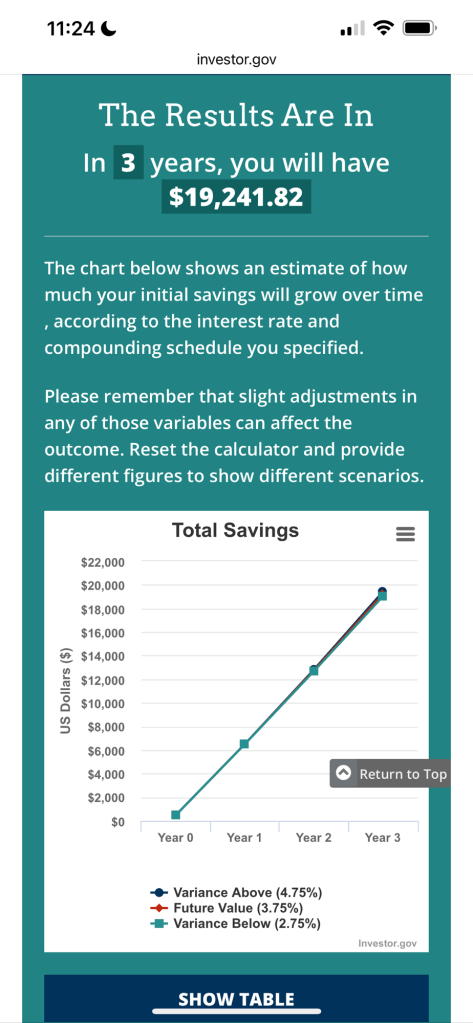
You can follow this example of $500 per month in an HYSA for three years to cover the down payment of a home under $600,000 on an FHA loan. To estimate how much you need to save and for how long every month and how many years, investor.gov has a compounding interest calculator estimation tool and here’s a snapshot of it calculating $500 per month for three years with an HYSA averaging 3.75% APY with a variance of 1% since their rates fluctuate up and down a percentage point often depending on the economy. $20k can easily be raised over three years at this pace as you can see but it’s also important to note, the savings for closing costs have not been included. It would likely take at least four years to fully afford cash to close on a home up to $600k on an FHA loan.

Compound interest is money earned over time from the bank interest rate paid to you as the APY
You can see the trajectory of your money goes up and down 1% as well and it’s pretty similar but obviously more is more with APY over time.

On part 2 of this blog series I will share a few of my favorite savings plans I love to send to clients but for this post I want future buyers to remember you can keep it simple with a flat amount per check or month; but you can also do a simple percentage of your income. Sometimes people just prefer to follow the 10% rule of putting away ten percent on each pay day into an account to accumulate that way. For some, that might actually be a step above a flat amount of $500 percent month or check because many people like to really push their comfort zone as they get closer to wanting to realize their homeownership dreams. Do what works for you. On the next blog, I have some plans to help get you started or you can email me at agentofparadise@gmail.com to customize a better one that’s tailored to you.

What matters as much as your savings plan is your account where these funds will sit. At the very least, your money should be sitting in an HYSA or CD. I have mentioned on many articles before this one how genius using a Roth IRA can be as a savings account hack. Remember that your contributions, all the money you put in through deposits, are not entitled to the rules of fees or withdrawal restrictions so you can always pull them back out without fees or taxes and no requirements to season it like a traditional IRA requires. The interest you have earned (the gains) on your money ARE subject to withdrawal rules so that money must stay until the account is five years old and you’re at least 59 1/2, but otherwise, you can pull out money. Your down payment funds in this way help you build a retirement fund at the same time because those gains can be dispersed when you’re older, tax free! It’s a great hack every eligible person should do—which is most people. You can open an account through Fidelity, SoFi, Charles Schwab, MorganStanley, Edward Jones, etc to get an account open and they’ll guide you on your journey as well so your money grows even better than a high yield savings account or certificate of deposit can.

What to Know About Down Payment Assistance Programs

Should you roll in your down payment to your mortgage?

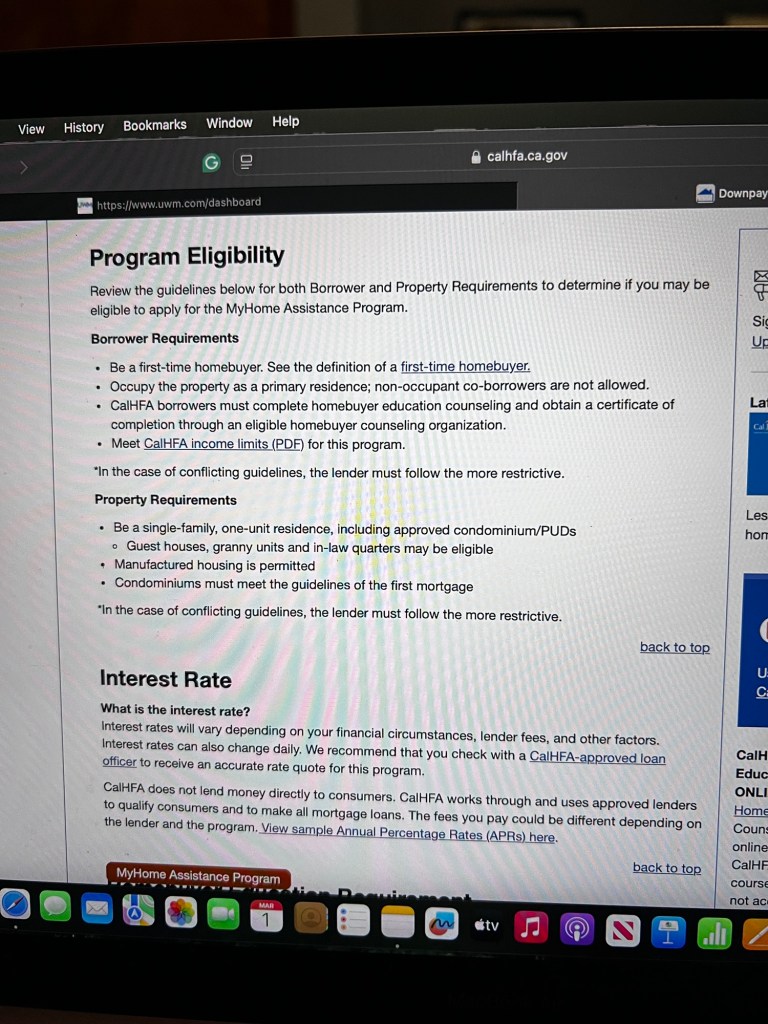
States and counties have their own down payment programs so talk to your lender about your specific area and file. For example, California has the CalHFA loan programs for conventional and FHA loans.

Go to the website for more information
Other states and counties have more options and different ways to cover your costs

The type of program available in your area and the home you’re buying can determine what type of down payment assistance you can receive and how much. Some programs are grant-based, others provide only a small bit of assistance so you need to cover most of the down payment still, and others are paid off as a junior loan when your home is sold again down the road (the one you’re planning to buy currently). Other programs roll in the down payment into your mortgage which can greatly impact your approval amount and raise your interest rate. Since these programs and terms vary so much by zip code and client, it’s important to speak to a lender local to your area and discuss your affordability options.

For details on shared appreciation as mentioned in the photos, go to the website listed and read the examples and information

If you need an agent or lender anywhere in the country, you can call/text or email me:

(760) 625-6836 agentofparadise@gmail.com