I Have No Credit. What Do I Do?

Save and share!

The first thing you should do is go to www.annualcreditreport.com and pull your report to make sure there are no open accounts you don’t recognize and make sure any older accounts (besides bankruptcies and evictions) are off. Most should be removed after 7 years. Most medical debt is not your big focus but old credit cards you defaulted on, loans etc, and foreclosures that are 7-10 (depending if they’re part of a bankruptcy filing) should also be gone too if they’re over 7 years. You report needs to be cleared to really start building credit or you’re going to need to look at your newest debts and start paying them down. If you’re deep in debt, those need to be cleared before you take action and begin building a new credit future. If you had something repossessed and still owe on that balance, especially if they’re a newer debt (5 years or less) they’re going to be keeping your future from happening. Own up to the past and take care of it. We all make mistakes, hit rock buttom, and we all have to dig out of a huge hole. Just do it and pay your obligations. You incurred the debt so just make it right not for the company but for YOU. Your future deserves a fresh start but it can’t happen if you don’t remove all the junk you want to leave behind.

You need a clean slate, or at least have no negative hits anymore that are on there, and start from scratch. From personal experience and many others I have seen start over, Capital One and Discover are the best and easiest cards to get with no credit. You need a stable income of minimum wage, full time usually, and be able to pay your current bills and the card but you can include household income even if you have roommates, live at home, or have a spouse who helps cover a lot. If you get approved, it’s usually around $300 or so but that’s all you need to start! If you don’t get approved then refer back to your credit report and look at what is still outstanding. What’s there could be holding you back. If you don’t have much or anything on there, consider your bills could be the problem and maybe other debts. If you have student loans that could be the problem, consider paying an additional $100 a month and calling to renegotiate your interest rate. Explain you’re going through financial hardship and want to know if there’s any way you can save on your payments without incurring more long term debt or hurting your credit. Those two things should help a lot. I’d also try again in 30 days or so to those credit cards and see what happens. Make sure your credit also isn’t locked at the three credit bureause like LifeLock or something like that.

Try the Discover It or what I did was the Capital One QuicksilverOne. You can get a sign up bonus here if approved: https://i.capitalone.com/JeXD0GYGb for free once you begin charging.

Another option that does work but is slow going are secured, or bank prepaid, bank credit cards. They have to be regulalry used and properly paid to have any impact and in the first year you may not not notice much because credit building is a long term commitment with them and it’s harder to get built up. Secured cards also don’t work as quickly for many people, especially if you don’t keep up using them and refilling, so keep that in mind. At the start of every calendar year, also pull your free annual report again and see what’s reporting, removing, showing no longer, and what’s looking better in terms of debt amounts. This report doesn’t show a score but amounts and companies with your identity attached to them so make sure nothing is there that shouldn’t be!!

If you need more help starting over and building from nothing email us at jenniferlarsonent@yahoo.com and ask for the Road Map. It’s a free resource we have to help you get started. In the subject line be sure to write “Free Road Map” to be sure it doesn’t get lost and we’ll send it to you!

Once you get some type of card from a reputable company that will help you grow your score over time, keep up with it. For a secured card, your deposit is your prepaid limit so keep doing it every month or put your paycheck on it each check and build that way. For a standard credit card, multiply your credit limit by .1 and that is 10% utilization rate. To build your credit faster, never leave more than that number as a balance every month! If you charge more pay down to that amount every day so it doesn’t ever exceed. Having $200 on your bill out of a $300 limit is a 2/3 utilization rate (not good) and also means lots of interest so pay it down. Use it like a debit card, whatever you charge, pay most of it off every day so less than 10% of your limit is on your card at any given time so whenever your credit report updates it will only show your good payment history and low risk of maxing the balance. That’s how you build credit fast!

If you have a solid history after six months of use (or another card giving you decent credit) you can apply for the SavorOne card https://i.capitalone.com/Jruy7M3nV and get a sign up bonus here if approved. This card is being called the unknown hero in the game and one of the best credit cards on the market without an annual fee because it gives you 3% cash back on groceries in store and 1% on other purchases but after another six months you can keep that saved cash back to apply for the Capital One Venture if your credit is close to 750 with decent income and you can convert that rewards cash to miles for free travel! That’s what I’m doing and banking my travel rewards to earn a free flight to Europe with my kids. All of my daily expenses go on the card and I pay at the end of the day and don’t spend my rewards cash until I transfer them. There’s a secret to this so follow the Points Guy, Upgraded Points, and others how to do this to 10x your miles for free!!

After a year you can upgrade to a third card if your credit is building well enough and then just keep your payment history excellent, your utlization statement balance low, and keep going. Longevity of these factors will raise your score even more so you can start seeing 800s and get qualified for better home and auto loans, refinancing debts, and more. Going from 750-800 is very much like losing the last ten pounds and this is really where the long game comes in but it’s important to keep going and understand, it’s easy though timely. As long as you’re paying your bills on time and not carrying big balances, or closing accounts, you’ll see big returns! I have seen a 775 credit score not be enough for the best rates in mortgages many times so I strongly encourage future homeowners or those wanting to refinance to hit the 800 mark and keep over it because that will save you thousands and give you by far the best options. Keep it up!! You’ve got this.

Credit Building Update and Tips

Recent update!

I have said recently that for most of my life now I have had no credit, not bad credit, but nonexistent credit. I bought my cars all used in cash, my husband qualified for our homes on his own, or we bought cash, and our last car he bought as a surprise without me on finance and I paid it off in two years. I never needed credit. I either saved and paid cash or I didn’t buy it. Now though, we’re in more expensive homes and we are building our investments in real estate that I can better help grow if I go in on the financing. The problem is obviously I can’t use my income without also using my credit so I had to build it if we were to keep leveling up in life how we wanted to live, refinance, and buy our dream summer home. I got to work.

A year ago I researched and found that the best legitimate cards out there for credit newbies were Discover and Capital One. I applied for the QuicksilverOne card on my own and was approved for $300. I use it often but always paid off most of it so as not to keep a balance, thereby avoiding interest and developing the two most powerful parts of credit building: payment history and credit utilization. How well did I pay off my balance and how much of a balance I let sit before paying it off. Those two factors are nearly 2/3 your credit score and another 10% is new credit because occasionally having new accounts is also good for your score. 75% of your score can be built up just by opening up your first credit card and keeping the unpaid balance no more than 20% of your total limit and always being early or on time with your payments. The next factor is length of credit which is another 15% of your score—90% so far!!

Keeping your first card for years is important afterwards because keeping it will also build your credit so long as your payment history and utilization are always solid. Your total balance should always be under 20% every day (or pay it off that day!) otherwise that day you don’t pay the higher balance will be the day your credit report updates and shows a higher utilization and it takes time to come back down. Pay off big purchases same day to avoid this and keep at it. You’ll be kissing 750 in no time.

Capital One allows a new card again after six months and they offered me the Savor One card which I was approved for $1,000 and that’s been how I have also building my score. I talk more about this in previous posts but basically now having a mix of older and newer cards is helping my score, as is more total available credit, and an excellent payment history because I make payments 3x a week to never have too much on my cards and never pay interest.

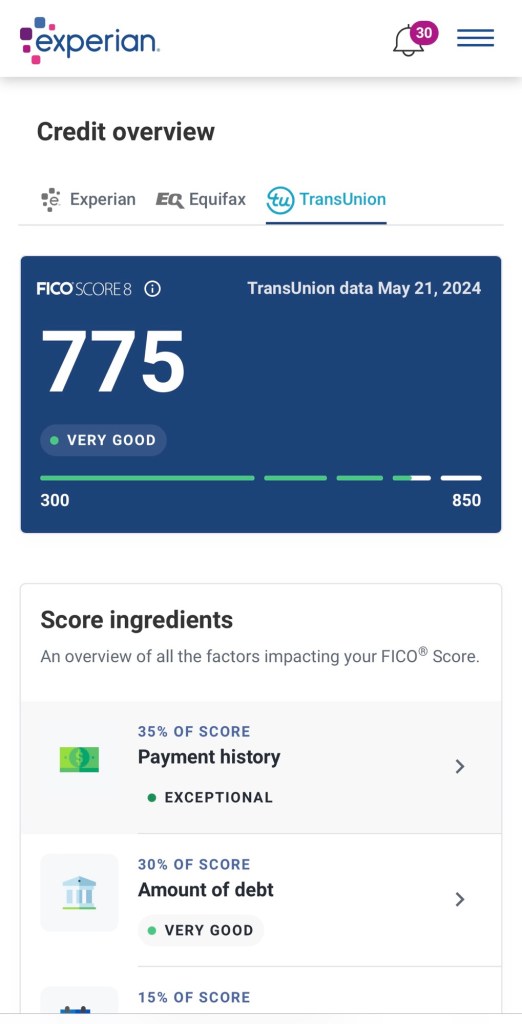
Notifications on my phone my latest report came out! I have monitoring through SoFi as well as Experian and TransUnion.

It’s now been ten months since I started this credit journey using what I know about credit building and how lenders view credit. I’ve seen lots of Instagram and YouTube videos saying how you should play the credit game but that’s not actually true nor is it any faster—especially to lenders. Credit Karma and online credit score monitoring sites are not the same as what lenders pull because we interpret them differently and factor additional information not stated on a typical report online. That’s why underwriting is such a process because it’s far more complex than a report and opening cards galore is not a strategy an underwriter wants to see when considering your loan. It’s not a game, it’s a strategy.

Remember too, lenders need at least two years long standing history of multiple accounts of credit—not just cards but also not just a pile of cards being run up or not used at all—at least two years of consistent ability to show responsibility of those accounts. Store credit cards are not recommended and neither are secured unless the Discover It or Capital One cannot approve you. They do help but slower. I have one on my credit report that’s over ten years old and I didn’t use it much after opening. It’s helping my credit score “length of credit” but doing absolutely nothing for the rest of my score like payment history or even utilization because I am not using it so it’s not factored. For lenders, it doesn’t even count at all. This is one of my reasons why Credit Karma is often wrong and higher than what a lender actually sees. My score with just that card was insufficient for credit reporting because it had no use or utilization at all. Don’t just open cards to open them and have them on your report. Be smart with how you plan them out.

So, when building credit, work slowly up to 3 cards and then focus on growing your score over time. The more years of responsibility, at least two years for lenders, the more you can prove and improve you’re score to refinance, buy a house, get better rates, and attain the goals you have for your future.

Always good to get these emails every month!

What’s the Difference Between a Charge Card and a Credit Card?

They’re not the same? Nope! And they affect you very differently if you apply for one without realizing. One can be horrific on your finances and credit for years if you make the wrong choice.

Always check store cards too!

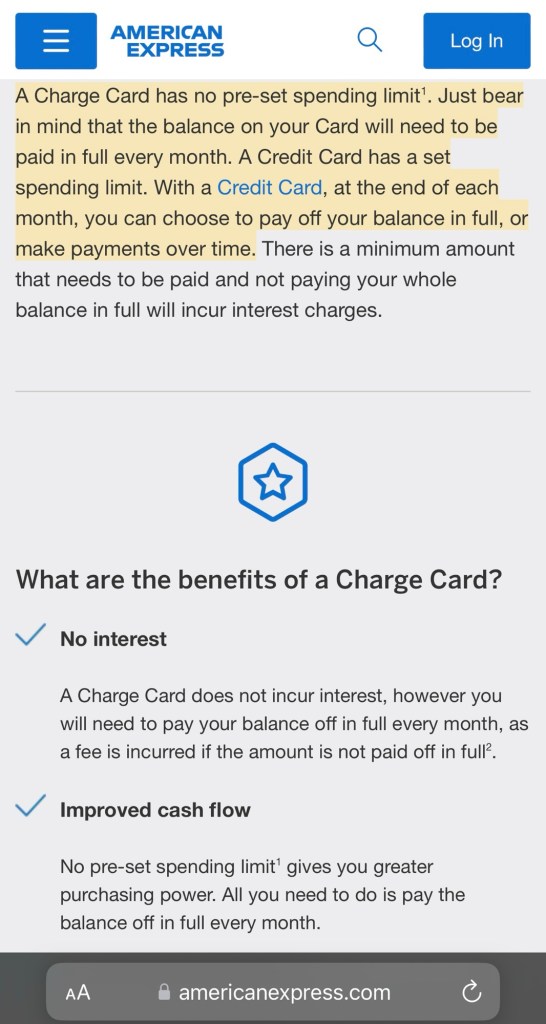
A charge card actually has to be paid in full every month. They are NOT revolving and recurring debt. You can’t carry over a balance to the next month or pay over time. American Express is the most widely used example of this—however, they have some hybrid features these days.

Remember when AMEX was seen as the upper echelon of credit cards and only rich people had them? There’s a reason. You have to make good money, have great credit, and they were always primarily a charge card; not a credit card. Fast forward to 2024, and we now have revolving accounts for most things these days. AMEX, has the OPTION of that called Pay as You Go. It kind of makes me giggle they even have a name for it let alone that one. Basically, you can either choose a charge card or credit card. I don’t know why they don’t just say that because a credit card is a pay as you go debt. Anyway….

Imagine you signed up for the Gold card and not knowing the difference just select charge card (because doesn’t Pay As You Go sound like a secured card aka prepaid?). You then go buy the expensive thing you wanted so you could finance it and get the miles over time. Until you get the statement and read to learn the entire balance is called due. What??? It almost sounds like we’re in the 80s again! Nope, this still exists and that’s why your grandparents often said charge card for their American Express and other cards. They are!

Credit cards we all know how they work and they report regularly to the credit bureaus your utilization, balance, limit, payment history, age of credit etc. A charge card reports differently and this is how it can also affect you (besides not paying it off at the end of the month because you thought it was a credit card) because they’re not even factored at all in many cases if you’re paying them so they don’t help you build credit—because they have no limit to gauge utilization and payment history. You are technically supposed to have a perfect history or you’re in default. Some charge card companies also don’t report all or any of your information unless you are behind, late, etc so you may not be seeing a rise in score how you thought you would. If you get behind or late, those will show guaranteed with a big drop and your card may be cancelled. For credit building, you need a revolving and recurring debt with at least a small balance carry over every month; that’s not allowed on a charge card so get a credit card like most are these days.

So when you hear a commercial state “with no preset spending limit” that’s a dead ringer for a charge card. Are they bad? Not at all—unless you suck at money management. 🤷‍♀️ Early in your credit journey though, stick with credit cards and remember AMEX charge cards require high income and credit for a reason. Otherwise, try Citibank.

From their website

So, they’re both fine but one is absolutely dangerous if you accidentally get one not knowing the difference and charge cards can wreak havoc on your life if you learn the hard way. Credit and finances will be ruined for years to come. NO CARD is meant for you to spend beyond your means or live lavishly. Ever. So don’t. If you’re smart with money and never charge what you can’t quickly pay off within 30 days, either works great. Otherwise, stay away 🙅🏼‍♀️.

3 Things Your Income Must Show

When you apply for a home loan your lender is going to look at three key components for determing your Usable Income, the number we use to qualify clients on their application. This is the number we take from the last 24 months (two years to the date) and compile the gross income needed. The number doesn’t matter if it doesn’t also meet these three requirements:

All incomes must prove these 3 things!
  1. Stability- No matter how high your income shows it needs to show it’s consistent and has been ongoing for the last two years thus far. If your past income looks like a rollercoaster or you had one big check issued but that kind of income hasn’t been a regular figure in your past income history, it’s not a usable figure as stated income. You need to show a consistent flow of income every month.
  2. Predictability- A lender needs to be able to look at the income numbers you provided and see that your future checks will support the numbers you’re claiming on your application and show that over the last two years, there’s an obvious trend of similiar income that supports what you’re stating as your monthly income and salary figures. If your income is all over the place, lenders take an average of the last two years and that means one big pay day gets leveled out to the rest of your typical income and could show risk to the lender that might even be a red flag despite it being a big pay day. If your income is not predictable for the upcoming months then it’s hard for lenders and banks to back that because who knows if you’re actually going to make similar money or any at all if you can’t even show for the current year this is a regular occurrence.
  3. Likeliness to Continue for the Next 3 Years- This is where a couple of big pay days and the first two factors can make or break you. If you’re commissioned or self-employed and you don’t gross a typical amount but you made a few big sales, it’s still factored in total and divided out. If your statements don’t show you consistently make good money on the regular then you probably won’t for the next three years. If you do have consistent income and a good monthly income, you need to be able to show that your income is likely to maintain for the next three years as it did the past two. Contract work or someone working for a company going under, would need their future lined up for this to work and a Verification of Employment (VOE) will need to concur with this. Whatever your situation, it needs to be likely to be the same situation three years from now at least, if not better.

Many factors also play into these 3 components like the company itself, the economy of the job, the nature of the work, the industry, the overall economy, etc. If you’re making good money for a company going out of business, will you be in the same line of work at a new company and have a job lined up? Are you possibly going to be looking for a job soon or taking a pay cut? What about a different position? If you’re in a business where that industry is going through a major slump or potential drop off, that can affect you in underwriting because of the volatility of the work you’re in and what’s happening around it. The same goes for the economy if you’re in commission, sales, etc and the economy is tanking. If you’re an ER nurse or doctor, then that’s different than someone who sells luxury homes or is a contractor for a home builder in times like these. This is why underwriting is so precise and takes time. So much is considered before being approved. These are just the basics that every application must have at minimum. In the end, you need to be able to price a 5 year history of solid income that’s pretty level and can be proven.

What Should I Do Before Listing My Home?

Remember, they’ll swipe past you if you don’t stop their scroll on Zillow!

Most sellers need to do more than tidy and fluff pillows before putting their home on the market. Since you’re planning to move anyway, one thing to do is look into a storage unit and doing a purge room by room. As you’re packing up things you won’t need for the next six months (or can live without until you close on your next home and move in) is also separate everything you’re not taking with. This means getting everything bagged to recycle, trash, donate, giveaway, sell, hand down, whatever so you can begin decluttering the home. You don’t need to necessarily pack much but let’s say it’s spring or summer; you can pack winter items for now, and put them in storage. These steps will automatically help your home look neater and more organized to buyers, as well as make moving day easier for you. Buyers want to see the space without it being cluttered and jam packed. It’s hard to visualize when stuff is everywhere, overshadowing the home’s attributes.

Second, remove all personal items like photos and precious things left out. Many sellers decide to start wrapping and putting them in storage too, already packed to move. Carefully pack them for the moving truck now and take out any photos, personal items that have names, etc. and remove anything that indicates who you are. Remember to pack now anything of value you can go without or hide it well because you don’t want to leave that out for photos and showings. You may never see it again. It’s also to help people see the home beyond the stuff. Buyers need to see themselves there, not you. This also helps the home present better and looks neater to buyers as a whole. Less is more.

Third, go through kitchens and bathrooms are toss expired items, unused times you don’t need, organize pantries, showers, countertops, bottles, etc so everything looks ready to photograph and keep it that way until moving day. Buyers will tour the home multiple times during escrow as well so keep them home nice until moving time when you’re actually preparing to leave and take things away.

Purge some more, pack decor, and other items to get ready to hire professional cleaners. Everyone thinks they’re tidy but a deep clean by an experienced cleaner or company makes all the difference. Have the bathrooms and kitchen detailed, steam clean the tile and carpets, dust all the fans and fixtures, etc. A thorough clean is essential!

Start getting rid of furniture you’re not taking and putting the rest in the storage unit to get the home professionally staged. It transforms any home and most homes need it unless they’ve been professionally decorated. Work with your agent to discuss this.

Every week after escrow is opened, start packing more and more things you can live without for six months, sometimes escrows on two homes take more combined time than you think if something goes wrong; been there many times! Continue to pack and purge guest rooms, rooms you can downsize for now and keeping slowly emptying the home. It’s a huge difference to buyers to only see what they need to make a decision. Less stuff makes homes feel bigger and the flow more seamless.

Keep the home clean and tidy like a magazine until inspections are done and signed off. You’d be surprised how many straight forward deals fall apart at the closing table. I’ve had it happen to me a couple of times and many times with clients. Nothing is done until keys are handed over and the deed is recorded. This includes the garage and closets because clients always want to see their full size and how well they can organize their own belongings. Whoever uses the garage or a shop usually go straight to the garage while the other spouse is checking out storage inside. It’s very important to start clearing these spaces into orderly bins, stacked, and labeled so visitors can easily make a path and gauge the space.

Lastly, don’t neglect the outside!! Make sure the landscaping is tidy and well kept. Have a gardner come in once or twice if needed to trim shrubs and trees, mulch, mow, weed, water, plant, pull, whatever he needs to do. Take your gnomes and decor to storage. No one wants to see those and if you’re taking your fountain, disclose that and have it scheduled for removal before final walk through or inspection. Walk the outside of your house and look for deferred maintenance, paint chipping, cracked windows, damaged shutters, rusting gutters, etc. Replace and fix what you can because that can turn a lot of buyers away. I’ve seen so many buyers not even go inside because of this!! People don’t want projects unless it’s an as-is type of sale or fixer property. If it’s not, they expect to see little work needed. See your property in the eyes of buyers and do a thorough walk through with your agent to “blue tape” all these. If it looks like money racking up to you, it absolutely will to buyers and if they do offer, it will reflect in their price. Get it handled now and avoid low offers citing work and costs to repair.

If you have more questions about buying and selling homes in California, or moving out of state, email me at agentofparadise@gmail.com or call/text 760-625-6836. I can help you find a great agent to buy or sell out of area.

Should I Pay Off My Debts Before Buying a House?

Experts give different answers but this is truly a personal choice. Do you have to pay all your debts off? Usually, no. The issue some people has is their income isn’t high enough to carry much debt and a mortage so lenders will tell them to pay down debts first. I recently had a client working through pre-approval and they only had savings for the down payment but not closing costs and how much they could get approved for wasn’t as high. We also tried a no down payment program but because the rates were almost 9% for those programs they were approved for nothing in the area that low. Their biggest issue with both loan types? Their car payments.

When each spouse has a car payment, it really affects how much you can afford. Remember that you’re approved for payment, not overall price or rate. So if you’re approved for $3,500, it’s that payment regardless of home price and rates BUT that payment doesn’t go as far when rates are higher because more of that payment is interest so less is left for actual home price. And depending on rates, that payment gets you far or not. With 3% it gets you a great house in most areas! At 7% it doesn’t get you much in many areas and it could be a home at $350,000 in some areas where that doesn’t get you far. Now let’s say you have two cars that are about $500 a month. Well, lenders then deduct those payments from your overall approval payment. Now you’re only approved for $2,500. In your area at current rates, how far will you get in the market with that? Most people? About $250,000 which is around what my clients were approved for. It didn’t get them anything anywhere near them. The car payments were killing their chances of buying a new home. They’re now focusing on saving and paying off those cars instead.

So, it depends. If you $350k gets you a house without paying off debts, is it worth it then? Well, it depends if what you want is in that range or closer to $500k. It’s all subjective. If $350k gets you what you’re happy with, then no, you don’t need to pay off debts to get approved. Each circumstance is different and your needs should be first priority when deciding to or not. Do what’s best for you!

How to Much Do I Need to Save for a Down Payment?

Let’s calculate it for a variety of different home prices. Regardless of mortgage rates, this is how much you need to save for a down payment at 3% or 7% because they’re based on the math of the sale price, not the interest rates. How much you need to make though IS dependent on rates so that math changes.

Let’s start with a $200,000 house on an FHA 3.5% down. On your calculator type in 3.5 and hit % to get a decimal of 0.035 and then X 200,000=$7,000 and your closing costs will be at least that much for a total of $7,000 (more in some states) so in this scenario I’d advise clients to have at least $15,000 plus for inspections, and buyer agency compensation if necessary. I tell clients expect your total cash to close will be at least double your down payment in any state. In other states, it’s higher.

Let’s say you want the house but the roof needs to be repaird and the seller isn’t about to fully cover the full cost of something they’re never going to benefit from. (They say that all the time in negotiations!) You might have to meet in the middle with that expense if you really want the house and in seller’s markets, they have that leverage so multiple houses you look at might have this scenario. This is why so many buyers get blindsided by closing costs because all the money needed to bring the deal together can add up through the transaction. This is where it’s important to have additional savings or go back and negotiate seller concessions too. For the seller, they can be pay things at closing from the proceeds to compensate you some costs. You can have them cover what you covered on the roof out of pocket in seller credits, etc. No down payment loans are even higher interest rate and you’re approved for less so keep that in mind. You might not qualify for the house you want anymore. I have seen many times the “double your down payment” rule doesn’t work. I recommend more to avoid stress, surprises, and to know you’re in good standing.

All this to say, for each price, my rule of thumb (to also account for negotiations, inspections, and other fees you’ll pay during escrow) I tell clients, if you have 10% of the total purchase price, you should be fine.

$200k=$20k, $300k=$30k, $400k=$40k, $500k=$50k etc. If you’re worried about the “new” NAR rulings and you might have to pay commissions if you want an agent to help you, these amounts should help cover. If the seller is insisting on lots of costs for you to share, make sure you and your agent fully discuss it or get some kind of compensation back (like closing concessions as much as your loan allows) before you shell out. Sometimes you have to walk away. Ask your lender too because there are limits but FHA and Conventional loan holders Fannie Mae/Freddie Mac announced they will not count commissions against buyers so that’s good news!! There are still loan limits how much you can receive in credits so be wary of that and ask upfront with your lender.

One thing to note too, is that lenders like to see cash reserves in your account. This is why it’s so important to save and why I tell clients to expect a minimum of 10% needed because it’s not just the down you’re going to have to pay. Closings costs are just as high or worse, and some clients won’t get approved without reserves. Otherwise, you’ll need seller concessions and/or gift funds from loved ones to help the deal close. I’ve seen it too many times people weren’t aware of this. That emergency fund is what they’re looking for in addition to your total cash to close amounts. When in doubt, save more!

What is Credit Utilization?

Save this when you buy a house!

This one gets people mad because so many use credit cards and such for points, miles, rewards, airport lounge access, cash back, etc. I’m not knocking those when I explain your utilization rate! All I’m saying is when lenders pull your credit, at any given time we might see that you have charged up almost your whole credit limit for the month. The argument is always that “but I always pay it off in full” and that might be true if we look at your history. BUT…. we have to use certain metrics required by loan programs and when we pull your report it might not show for THIS month that you have paid it. It also shows a habit of maxing your cards which can worry lenders because what if your “stable” job ends tomorrow? It’s always a possibility as we’ve learned many times in this millenium already. If your job history is very stable though with consistent pay, unlike self-employed income for some that tends to vary or be seasonal-dependent, then it’s not an issue as much but it hurts your score.

Your score is calculated with this ratio so your score goes up and down but whent it’s pulled it might show a lower score and a large DTI because of a large unpaid credit card balance AT THAT MOMENT. Don’t fret though because I just tell future buyers to ask for a credit limit increase. Don’t you dare use it though! This means even when you keep your spending exactly the same, it shows at any given time a max 30% ratio which improves your score and DTI for lenders. You don’t lose anything if you don’t start spending more. Keep charging what you normally do. If you run up $3,550 on your $5k credit limit, see if you can get your limit extended past $10k. If you get your limit raised to $12,000 you are a hair below 30% so don’t exceed that or get it raised to at least $15,000. Utilization also accounts for TOTAL credit limit so if you have another card you don’t use, never close it because that hurts your score and utilization. Instead leave it open and let that help you. If you get a limit raise on one card and don’t use the other much or at all, it helps you actually!

Let’s say you have two or three credit cards and you add up just the limits to them all first, and it comes to $25,000. If your current balance across all cards (add all balances together into one number) is below $7,500 then you’re fine! Your total credit available across all cards is $25,000x.3=7500. That’s your max to charge every month. If you want to know where you’re at, add up all of your balances together and all of your limits together. Divide the TOTAL BALANCE /TOTAL LIMIT and it should equal exactly .3 or less. If it does, you’re fine. If not, you need a credit limit increase somewhere or use somethings on debit. You can also pay purchases off right away but do it within 48 hours or less so they don’t show on a credit pull. .3 is a credit utilization of 30% exactly so don’t exceed it by an decimal more. The lower the better if you can show lenders you use no more than 30% of your card. It’s how credit scores work and what helps you look better than ever to a lender.

Your utilization rate is 30% of your score and a lot of your DTI when buying a home so be very careful and strict with your spending. Also understand depending on income and other debts, your lender might do your preapproval and still recommend you pay down to 10% utilization rate until the sale is closed because underwriters want to see a much lower utilization for some clients. If you have a current mortgage, car payments, student loans, and other credit dings, they might need you to do this to improve your utilization because it drops your DTI, raises your score, and is more likely to be approved. It depends on client but this is not uncommon so be prepared when you go to buy a house. Some buyers do need to do it in order to be approved.

Keep in mind though, that age of credit is also important so don’t go adding new cards just to have more limits you won’t use to make it look like you’re only spending a fraction of what you have in cards. New account openings, or new financing of anything, is bad for your score and lenders so that’s why it’s more important to work on getting your credit limit raised versus new cards. Those drop your score and shows lenders you open new accounts which indicates the intent to spend more or open accounts for discounts that retailers advertise. Not good money habits. Don’t go opening a Macy’s card to help your utilization. It doesn’t work that way! Whatever your oldest card is, see if they’ll raise that one at all. Anything helps. You can always ask again in six months. If you practice good habits and have an excellent payment history, you’ll impress their creditors too and the company will eventually be happy to oblige when they look at your account history. Credit building is a long term game and it’s how you to build your credit from scratch when you’re just starting out.

The rest of your score is obviously payment history being another huge chunk so never miss payments, we see that as lenders and it’s not good. The same goes for your mortgage payment or utilities if they end up reporting your deliquincies to the credit burueas. Any late or missed payment in the last 12 months is a red flag for lenders so be on time!! It is so important to not ever get behind on anything. We look at everything that costs money and uses your score. If you get behind on the electric bill, they have your score from when you obtained service and they will report you to the credit reporting agenices if you owe them money. Collections of course hurt you too. Make your payments!!

For homebuying purposes, medical debt is not a big indicator to us but go to http://www.annualcreditreport.com for a free report (not score) and it’s a very detailed and accurate report similar to what lenders use. It shows all accounts with your name, the age, amounts, etc. Make sure you don’t have collections, accounts you don’t have, any fraud issues, and make sure your good history is being reported by all creditors. If anything looks wrong, call the company and find out why. Do this every year and make sure to read it so nothing is overlooked and you don’t miss inaccuracies or identity theft.

Easy and Fast Ways to Build Credit

Real credit tips on here!

This is for everyone who has no credit, bad credit, okay credit, or is deeply repairing their credit. If you have no credit you have probably struggled with getting a credit profile established; but in 2024, there are finally good ways that build credit in a couple of months and help you establish a profile creditors will love!

I went through this myself because I spent nearly twenty years paying in cash or not buying it at all. Since I didn’t have credit, my husband bought my car for my birthday on his own, and he did our home loan his own when rates were so much better and I paid a big down payment so he’d qualify. But now, my income is much higher and we want to take advantge of that as well as upgrade our home. I needed to build my own credit. I was always contributing fully to the bills but creditors and lenders can’t see that.

I did my research as I do often and over the last year I noticed how many more companies offer cards for people in desperate need of credit building help. I found some good research about the Capital One Quicksilver ONE card which is the beginner Quicksilver card. Their website touted how this was a great card for students, new adults, and those with no credit to get started with. Since a few sources were singing the praises and the reviews were good, I applied. I got approved in a minute! I’ve had the card almost a year now and I LOVE it. I’m not at all sponsored by them and genuinely researched on my own and got the card. I love the app, I love the card, I love the cash rewards, and I love how easy it is to manage my account on my phone. I get free credit monitoring too and additional discounts on websites.

I was approved for a $300 limit which is perfect. You can’t get into tremendous debt with that and I paid a bit on my card every paycheck so I rarely paid interest and kept my balance very low or at zero. This popped my score up FAST. In three months, I was in the higher 600s and it was going well. 9 months after getting the card I was flatlining my credit around 685 but I knew when I bought or refinanced a home loan, lenders prefer 2-3 solid credit lines of history and payments so instead of asking for a credit increase, I answered the offer Capital One was sending for their Savor ONE card. I had excellent payment history and my current card was always back at zero. I applied and got approved for $1,000. Mostly I just use that card now to build a credit history on that line too. I never max it more than 30% because lenders urge not to and I pay the balance off as much as I can per paycheck. I don’t ever wait for the statement. That’s when the most interest is charged and adds to your balance quickly.

For the first year, that was enough to boost my score into the 700s and teter on to the brink of 720 which is considered “good” credit to lenders versus fair below that mark. If you’re hoping to buy a home, get qualified for a good loan program that saves you money, and a better interest rate, you need to be at 750 at least. If you’re hovering at 750-760 keep it there and don’t let it dip below. If you’re at least there you’re in the sweet spot for mortgage lenders. If you’re even better, then of course, your rate and monthly payment will ususally be better. That’s my goal now is to keep working on my credit, age of credit matters too, so another few months of excellent payment history can push me to that mark. Some lenders like to see a third credit line with a solid payment history so I might do that next year if need be or at least wait a few more months. I don’t want to sabotage my progress by looking wreckless and opening all these credit lines at once. Slow and steady proves your quality as a lending candidate.

If you do have a car loan or mortgage in your name already, cosigning is fine, then you’re in good shape in terms of credit history so long as you’re making the payments on time every single month. Never miss a payment because that can hurt you more than you know, especially if it were in the last year. Be on time!! It’s so important and do not make partial payments. It’s so important to live a bit below your means, or don’t open credit you can’t afford. Keep the card unused but open. Don’t charge what you can’t pay back. It will hurt you worse than having no credit at all so don’t do it.

The biggest factors for your credit score, are credit utilization, which is one third. Of all your combined limits and debt, are you using more than 30% of those combined limits at any given time? You’re hurting your score. Almost one third of your score is utilization which is how much you CHARGE, not owe. If you use most of your credit limit per month to “get miles” and “rewards” you’re killing yourself. In those cases, it’s actually better to ask for a credit line increase BUT DON’T USE IT so your actual usage charged every month is low. For example: If you charge about $3,000 per month and put everything on that credit card, your limit needs to be at least $10,000 so your usuage is never more than 30% of your expenditures. If you have a $5,000 credit card, run it up every month but pay it off every month, it still shows lenders you charge $60,000 a year which is INSANE. We don’t look at whether you’re buying essentials or not. We look at, “this applicant spends every dollar of credit they have, non stop.” And that’s not good. Divide your total spending by your total credit limit and that’s your percentage. It should be under .3 which is 30%. If anything is more than that, even .35 or something, slow down your spending or see if you can raise your limit a bit.

The other third of your credit is the payment history of course. Always pay something more than the minimum balance, charge less than 30% of your credit limit, NEVER be late, never miss payments, never make partial payments or less than the minimum due, don’t miss payments so your utilities report you to the credit bureaus or you’re really in trouble, and don’t open credit everywhere. Three is enough and remember that includes mortgages and car payments (unless leased) so be very good at paying those on time, every time. The rest of your credit score is time of credit, so how long you have proven to be an excellent manager of your finances, how long the credit line has been open, older is better, and what the credit is. Those are about 3/4 of your score right there so if you can master all of the above, you probably have a score over 750 or on its way. Just keep going and keep it steady.

If you’re planning to buy a home in the next 2 years or less, don’t finance ANYTHING. Nowadays this includes online payment plans, pay as you go, buy now pay later, etc. Don’t add monthly payments because those affect your DTI which hurts your score and lending chances, but also adds more bills to you which is never good for lenders to see and certainly not your bank account. It shows a spending habit too. To see everything in your name get a free credit profile that’s most accurate at http://www.annualcreditreport.com for the report. If you need a score, Experian is the closest to accurate and current. They have free credit monitoring and paid plans if you need more help building credit.

It’s here!!!!!

Includes my Standard Savings Plan

My Homebuyer Savings and Debt Pay Down Plan is here and ready!!!

This is a key step to getting started on the home buying process when you’re not ready for a couple of years but want to get started saving and improving your credit. Finances and credit take years to build so get this guide now and start working on those goals.

The guide includes my Standard Savings Plan and how to pay down the right debt to improve your DTI, score, and viability as a buyer for lenders (like me). Lenders look at scores differently so it’s important to understand how it works for us and what we look at.

To get the guide, just email: jenniferlarsonent@yahoo.com and be sure to write GUIDE in the subject line. As always follow and check this blog often and visit me on Instagram at @snowplowsandcacti too.